The Problem
For founders and operators running several businesses, the hard part of email is triage: deciding what matters, what needs a reply and what should go away.
Many email tools want rules, folders and filters set up first, and the filters need fixing each time a sender changes. Paddock Mail starts from its defaults, so it sorts the inbox before anything is set up.
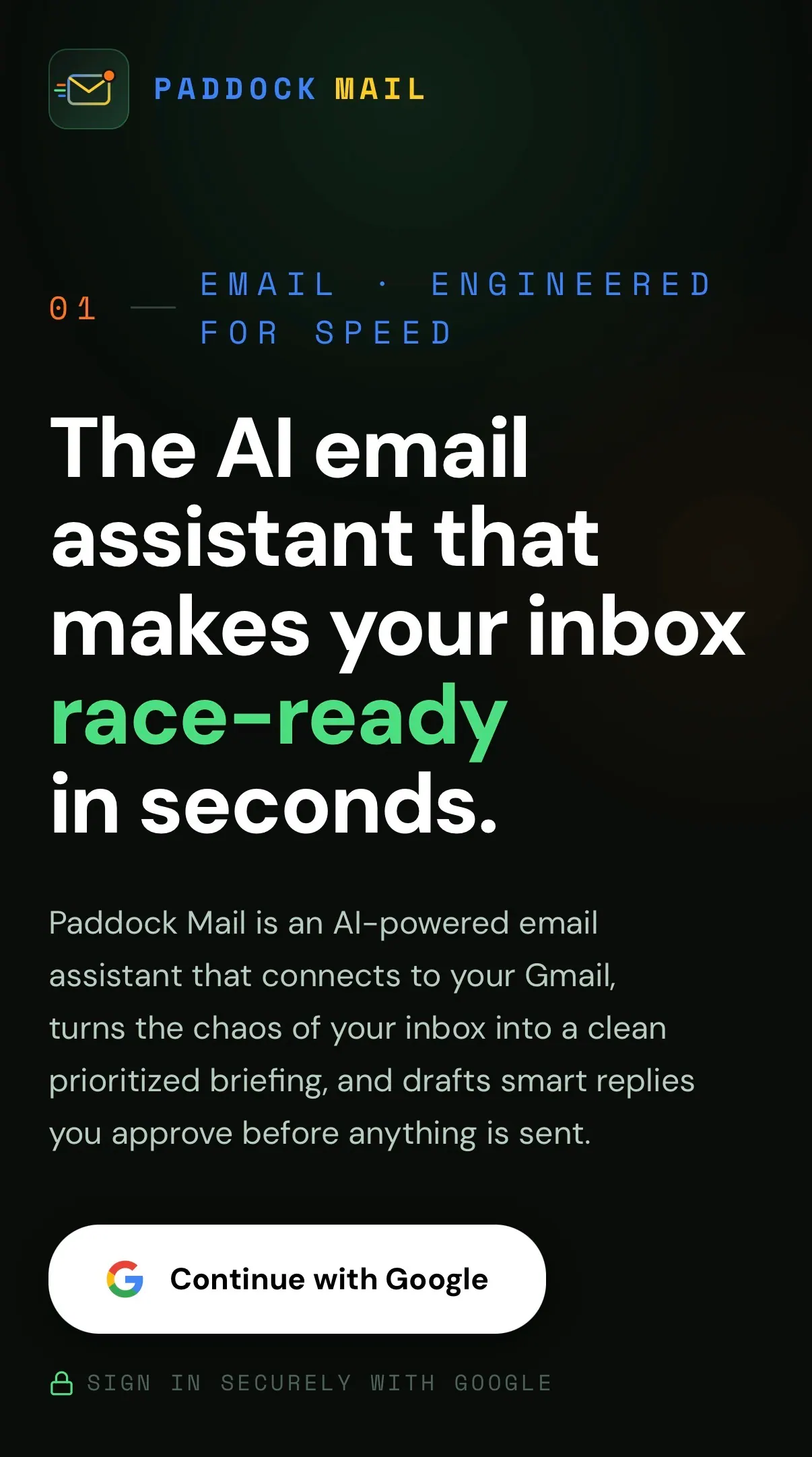
Paddock Mail was designed to support judgment: it surfaces what needs attention and drafts the routine replies, and the decision to send stays with you.
How It Was Built
Problem Definition
The time goes into the small call made on each email, over and over. Paddock Mail takes as many of those calls as it can and keeps you in the loop on the rest.
AI Architecture
Sorting and drafting run on three AI models from different providers, in order. If the first is unavailable, the next one takes over.
Automation Layer
Paddock Mail finds the newsletters and bulk senders you could unsubscribe from and lists them. You approve each one, and it unsubscribes and clears that sender out of the inbox.
Delivery
Routine replies are drafted in your voice and go out only when you approve them.
Architecture
If all three models are down, a rule-based sorter keeps the inbox loading.
The Result
Paddock Mail is live, and a new inbox is sorted from the first sign-in.
One provider having a bad day should not decide whether the inbox gets sorted.
An AI feature needs a plan for the day a model is unavailable. Start with a Fit Call.
Next Case Study
RAIL Redline™ →
Build With RAIL: Free
Answer three questions, type them or say them out loud, and watch RAIL scope your app in real time. Named app, working interface, and a build blueprint you keep. Before you ever talk to anyone.
A named app. A working interface. A blueprint PDF you keep. Whether we ever talk or not.