Paddock20
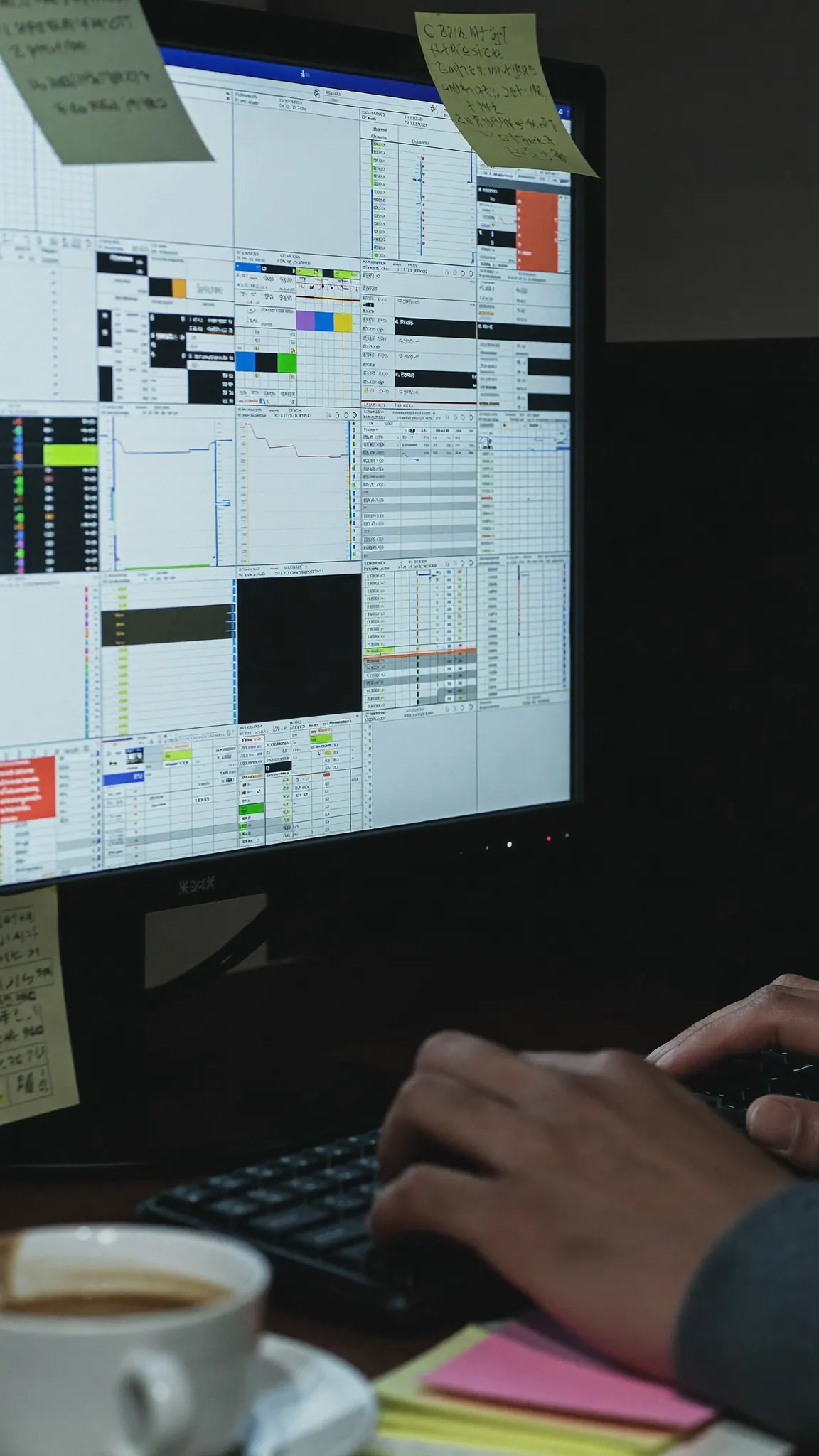
Dark telemetry monitor with circuit traces — agentic engineering visual

Agentic Engineering — A Practical Guide

What Is Agentic
Engineering?

You've probably noticed “built with AI” showing up on just about everything lately. Some of it is genuinely good. A lot of it falls apart the first time real users and real load show up — because no one with actual operational context was steering the build.

Agentic engineering is the difference. The AI handles the fast part: writing and reworking code at a pace no team can match by hand. A human who's actually run the kind of operation you're in handles the part that decides whether it holds up — the data model, the architecture, the edge cases that only surface on a busy Tuesday.

Definition: Agentic engineering is the practice of building custom software with AI-accelerated development, directed at every architectural decision by a human who already knows what the output is supposed to look like. AI for velocity, a human for judgment.

The Distinction

Not All AI-Built
Software Is Equal.

The output depends entirely on who is directing the AI, and whether that person has ever been accountable for what ships to production.

Vibe Coding

  • AI writes the code. Human accepts the output.
  • Fast to prototype. Fragile under production load.
  • Data model decisions made by the model, not the architect.
  • Looks right on demo day. Breaks six months later.
  • No operational context — AI cannot know what fails at scale.

Agentic Engineering

  • Human sets architecture, data model, and constraints.
  • AI handles implementation velocity within those constraints.
  • Every architectural call made by someone who has run the operation.
  • Ships to production. Stays in production.
  • Tool fluency × AI speed = software that reflects reality.
Carbon fiber texture background

Why It Holds Up

AI Is the Accelerator.
Judgment Is the Engine.

Anyone can point AI at a problem. What keeps your software from breaking is a human who already knows what the output is supposed to look like — someone who has built and broken the thing it's meant to replace. That judgment came from a long arc, from spreadsheets to production software, and it's what every AI-generated component gets measured against before it reaches you.

That arc is why we're called Paddock20.

01Excel / Google Sheets

Pivot tables, VLOOKUP, conditional formatting. Scorecards before no-code existed

02Microsoft + Google Certified

Enterprise tooling credentials. Not workshops: production deployments across organizations

03Adobe + Canva + PowerPoint

Can design, produce, and deliver. Not just direct someone else to

04No-Code → Full-Stack

Moved from visual builders to writing production software when the tools stopped being enough

05Agentic Engineering

8–10 tools orchestrated through a single AI-assisted workflow. Speed multiplier on top of 26+ years of tool fluency

For you, that means less over-engineering, fewer wrong turns, and software that still fits how your team works long after launch. Built at AI speed, without the AI guesswork.

Carbon fiber texture

Live in Production

DRX Lot Assistant™.
$125M+/Mo. Still Running.

A mobile-first lot operations platform controlling every vehicle intake, transfer, and release on a high-volume dealership floor. Built using agentic engineering: AI-accelerated execution directed by someone who had already spent years on dealership operations. Zero manual database migrations since day one of deployment.

$125M+
Monthly throughput
0
Manual DB migrations
26
Yrs operational context
100%
Floor staff adoption
Full Case Study The longer argument

The Hard Questions

Is This Going to Be
Production Software?

Will the AI code hold up under production load?

Only if someone who understands load designed the architecture. AI will generate code that passes tests in a low-volume environment. The data model, query patterns, and schema decisions are the difference between a system that holds at $125M/mo throughput and one that needs a rebuild six months in.

What happens when a vendor changes their API?

A well-architected system is designed around that assumption from day one: integration layers, fallback logic, and abstracted dependencies. AI-generated code typically couples tightly to whatever API it was trained on. That is an architectural judgment call, not a code-generation problem.

How do I know the feature I asked for is the right one?

You need someone who has run the operation to tell you when the thing you requested is not the thing that will solve the problem. That requires operational context AI does not have and cannot fake: someone who has managed the floor, the floor staff, and the failure modes.

Is this going to be production software, or AI garbage?

The difference is whether a human with architectural judgment is directing the AI, or whether the AI is directing itself. Every build here starts with a discovery session that maps the operational problem before a single prompt is written. The AI accelerates execution. The architect controls the outcome.

Build With RAIL: Free

90 Seconds to
Build Your App
With RAIL.

Answer three questions—type them or say them out loud—and watch RAIL scope your app in real time. Named app, working interface, and a build blueprint you keep. Before you ever talk to anyone.

A named app. A working interface. A blueprint PDF you keep. Whether we ever talk or not.

AI-powered90 secondsType or speakPDF blueprint
Build Your App Blueprint →Name + email to receive your PDF blueprint.
Dark professional workspace at night

Start Here

AI Speed.
Human Judgment.
Production Output.

Every engagement starts with a free 15-minute Fit Call. We decide together if it's a fit — and if it is, we move straight to scope, cost, and timeline.

Every inquiry gets scoped by Gavin personally. The follow-up and scheduling are handled so your time with him is the conversation that counts. The Fit Call is free — 15 minutes, no charge.

The Next Step

Every build starts with a fifteen-minute call.

Describe the problem. We give you a straight answer — either a ballpark and a path forward, or an honest no. You're talking to the builder. No pitch, no pressure.

Book a free fit call
Scope it with RAIL in 90 seconds
$1.2B+
Enterprise revenue driven before this codebase existed.
$125M+/mo
Moving through a tool we built. Running right now.
1
Architect between your problem and the finished product.
Paddock20Digest. Develop. Deliver.
Paddock20 · Nashville, TN · Bay #20